
DVID and Open Source: mastering IoT cybersecurity through practice
DVID and Open Source: mastering IoT cybersecurity through practice
The cybersecurity of connected objects is a major issue for companies, institutions and industries. With the proliferation of IoT devices and the constant rise of attacks targeting these environments, it is essential to be able not only to understand vulnerabilities, but also to reproduce, analyze and fix them. With this in mind, DVID's open source approach is a strategic asset to train, experiment and strengthen your IoT cybersecurity skills.
A 100% open source training board
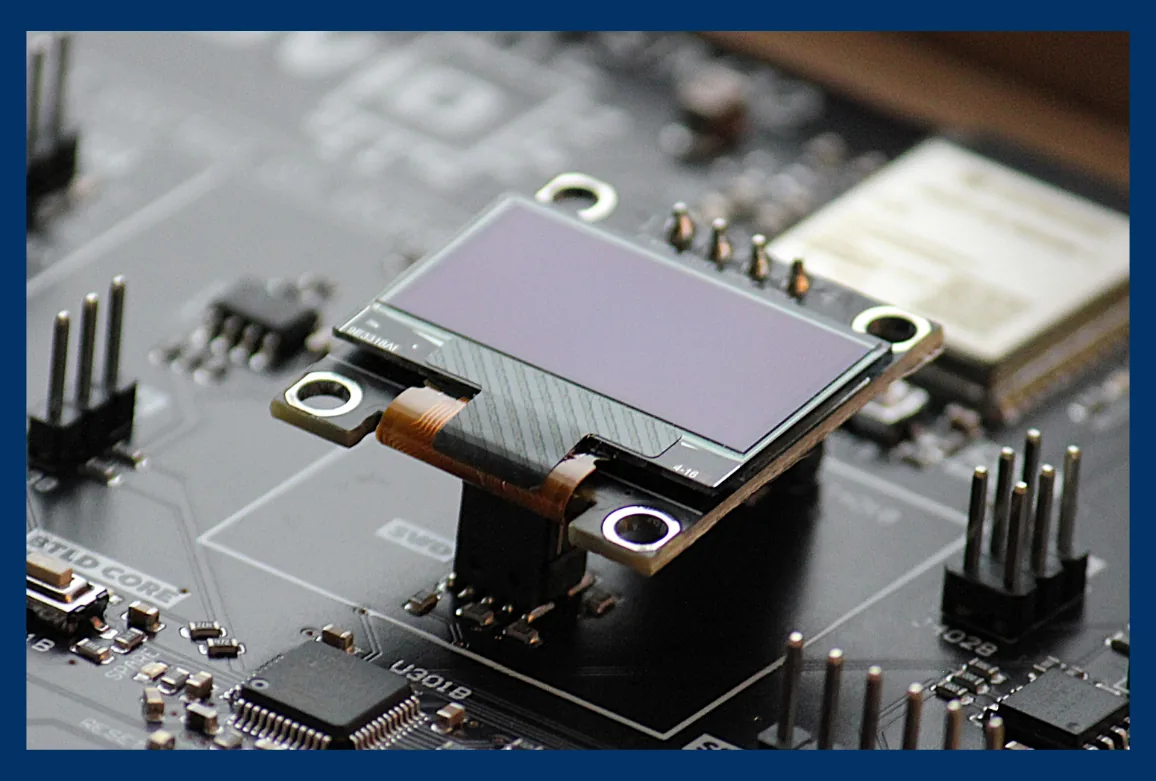
At the heart of our approach is the DVID board, an educational hardware tool whose entire design process is publicly available on GitHub.
This transparency means that every user, engineer, trainer or student can:
- Explore the schematics, the printed circuit board and the components to understand the hardware architecture.
- Assemble and customize the board to fit their training or research needs.
- Analyze and modify the embedded source code to study how it works internally.
In practice, this turns a simple learning aid into a real experimentation lab, essential to master the security challenges of IoT devices.
A versatile architecture for a wide range of challenges
The DVID v2 board integrates modern components such as the ESP32 and STM32, along with a set of protocols and interfaces (Wi‑Fi, Bluetooth, UART, I2C, SPI, JTAG) that make it possible to cover a wide variety of security scenarios.
This flexibility makes it easy to create and run hands-on exercises covering essential technical areas:
- Network traffic capture and extraction of sensitive information.
- Exploiting flaws in protocols such as MQTT.
- Unauthorized access through serial interfaces or hardware debug ports.
- Firmware reverse engineering and behavioral analysis.
Each exercise is designed to be concrete, measurable and progressive, allowing learners to build their skills while working on cases close to those met in professional environments.
Open source as a driver for upskilling
Making the board and its components open source follows a deep rationale: fostering auditability, reuse, collaboration and innovation.
In the cybersecurity ecosystem, open source plays a crucial role, as it allows the community to:
- Collectively audit technical artifacts and help improve them (security, features, documentation).
- Share feedback, write-ups and exercises around a common platform.
- Accelerate educational innovation by multiplying possible use cases.
This approach is part of a broader trend where technical transparency is no longer a hindrance, but a catalyst for security and technological mastery.
How to use the DVID open source platform
Whether you are:
- Training your internal teams,
- Developing IoT cybersecurity modules for your products,
- Preparing certifications or skills assessments,
The open source DVID platform offers a rich and modular playground for all these ambitions.
You can:
- Download the board's sources, schematics and manufacturing files on GitHub.
- Integrate the challenges and exercises into your training programs or bootcamps.
- Contribute to the board's evolution or offer additional content to the community.
By offering an open source training board and giving access to every technical element of its design, DVID does more than teach IoT cybersecurity: we share an open, usable and collaborative learning infrastructure, aligned with security best practices and the expectations of industry professionals.
Open source is not just a licensing matter: it is at the heart of our educational mission, making IoT cybersecurity understandable, practical and accessible to everyone.
Learn more: https://dvid.eu/opensource