
Default password on an IoT device: when the first line of defense does not exist
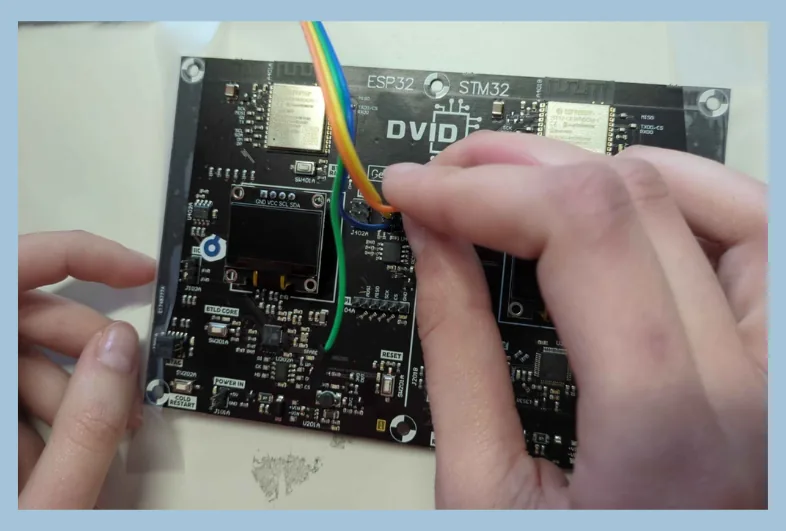
A new DVID training to understand and exploit the most widespread flaw in embedded IoT
A factory password left in production. It is one of the most documented vulnerabilities in IoT incident reports, and yet one of the most persistent. From surveillance cameras to industrial control systems, thousands of connected devices are still deployed with default credentials available to any attacker.
This new DVID training explores this flaw in a concrete way: understanding how an attacker identifies, tests and exploits a default password on an embedded system, using only a UART interface and a Python script.
A 100% hands-on approach, true to DVID's DNA
In line with our teaching approach — making IoT cybersecurity concrete, accessible and lasting — this module puts participants in front of a real microcontroller, a real firmware and a real authentication mechanism.
As with our other trainings, the goal is clear: learn by doing, not by theorizing.
Participants learn how to:
- interact with an embedded system through its serial interface,
- observe the firmware's responses to map its authentication behavior,
- identify protection mechanisms (lockout, attempt threshold),
- bypass these protections methodically,
- automate a dictionary attack suited to hardware constraints.
This approach matches the spirit of our open source platforms: giving people the means to understand, reproduce and fix.
A real-world scenario: when the password was never changed
The training relies on an intentionally vulnerable firmware, representative of what is found in the industry. The scenario simulates an automotive embedded system waiting for a serial connection and protected by a simple password.
Without revealing the technical details, participants quickly realize that:
- the device accepts authentication attempts over UART without any encryption layer;
- a lockout mechanism exists, but can be bypassed with a simple hardware manipulation;
- a factory password, found in any standard dictionary, is enough to take full control of the device.
This type of flaw is covered by Annex I of the Cyber Resilience Act (CRA) — requirement 2b — which forbids manufacturers from placing products with default credentials on the market. This training is directly aligned with this regulatory obligation.
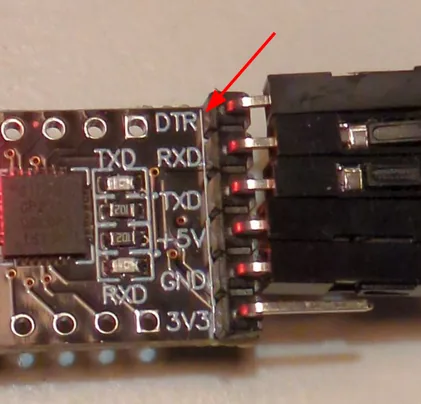
An embedded experimentation lab
Just like the open source DVID board, this training turns a simple exercise into a real access security analysis lab.
Participants work with:
- an ESP32 or an STM32,
- a UART interface at 9600 baud,
- a hardware reset mechanism through the DTR pin,
- a Python brute-force attack script.
Each step is progressive, measurable and directly applicable in a professional context, following the same logic as our other hands-on modules.
Key takeaways for participants
Beyond the exercise, the training builds essential reflexes:
- never deploy a device with a default password;
- force a password change on first boot;
- implement a robust lockout mechanism that cannot be bypassed by a simple hardware reset;
- systematically test the strength of authentication before going to production.
These simple but fundamental best practices are at the heart of CRA compliance and modern IoT/OT security.
Who is it for?
This module is designed for teams that design, audit or operate embedded systems:
- firmware engineers,
- IoT/OT architects,
- pentesters,
- security managers,
- product teams who want to build security in from the design stage.
No advanced prerequisites are needed: everything is explained, demonstrated and put into practice. Familiarity with Python and serial interfaces is a plus, but not a barrier.
Available now
This training fits naturally into an IoT/OT upskilling path, whether to strengthen an internal team, prepare for CRA compliance or structure a security-by-design approach.
Learn more: https://dvid.eu
Contact us: https://dvid.eu/#contact
Follow our news: https://www.linkedin.com/company/dvid/